Blanding: the quiet crisis killing your brand
What's driving the epidemic of sameness – and what differentiation actually requires.
JUNE 18, 2026 / Estimated read time: 5-6 minutes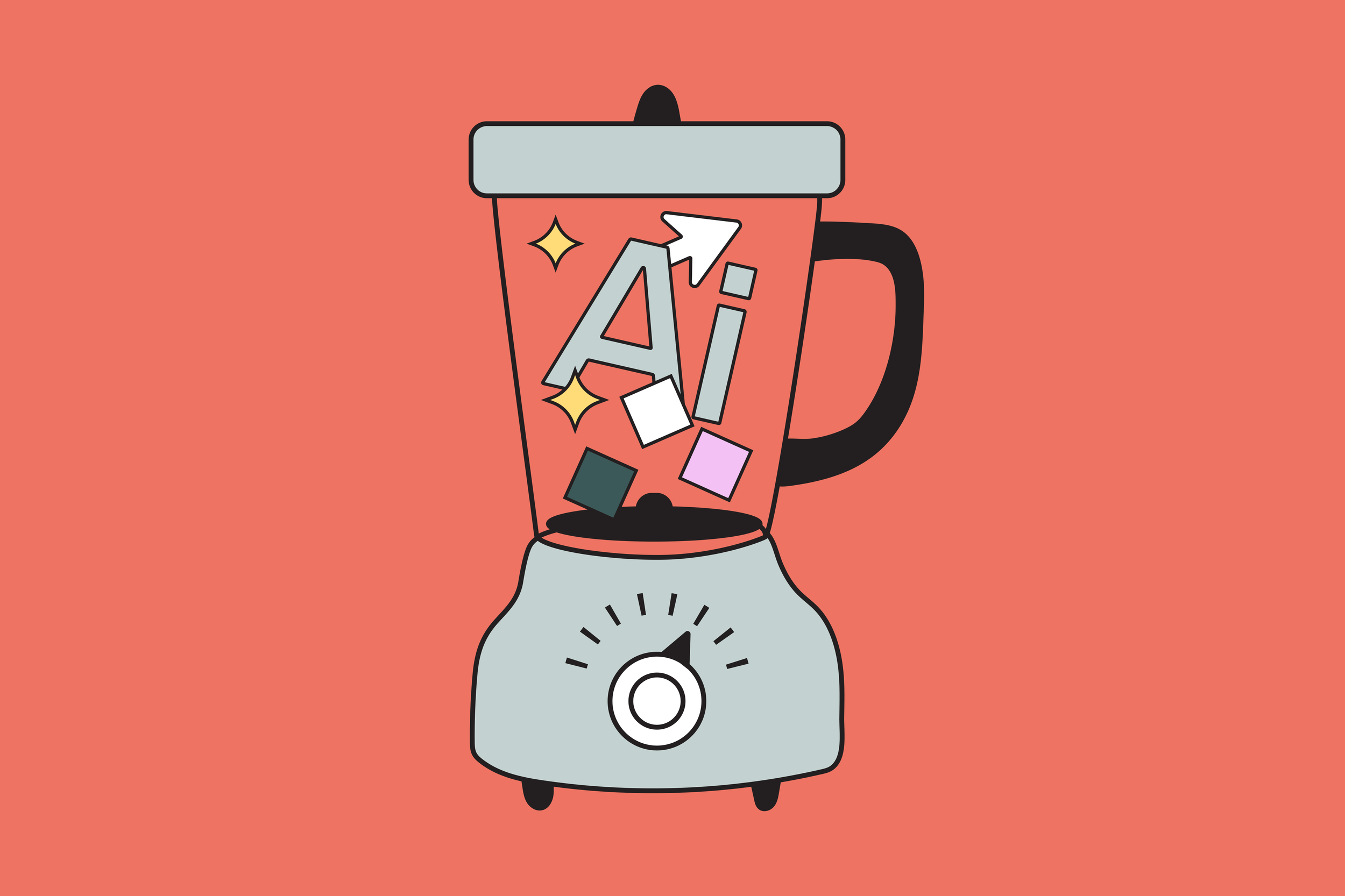
Good enough has never been cheaper to produce. It's also never been easier to ignore.
There's a word for what's happening to a lot of brands right now: blanding. It's the slow creep of sameness. The rounded sans-serif wordmark. The muted, earthy palette. The warm, approachable tone that manages to say nothing at all. The "we're more than just a product" messaging that every brand seems to be reaching for simultaneously.
Blanding isn't a new conversation – designers and strategists have been flagging it for years. But it's getting harder to ignore. Open Instagram, scroll through a few brand accounts, and try to tell them apart. A lot of the time, you can't.
The real irony is that most of this happens in the name of good branding. Teams hire agencies, invest in identity systems, and follow every right step. They still end up somewhere generic. Not because they didn't try – because they were optimising for the wrong things.
Here's what's actually driving it, and what it takes to build a brand that doesn't disappear.
What blanding actually is
Blanding is what happens when a brand prioritises inoffensiveness over identity. It's not a single bad decision. It's a series of reasonable-sounding ones that accumulate into something forgettable.
The visual patterns are easy to spot: wordmarks stripped of personality, colour palettes borrowed from a wellness brand three years ago, lifestyle photography that's warm and aspirational but could belong to anyone, and copy written to be "clear and accessible" until it becomes interchangeable. The harder thing to see is why smart teams with real budgets keep arriving here.
The answer isn't laziness. It's risk aversion dressed up as strategy.
Why it keeps happening
The most common driver is designing to avoid criticism instead of designing to be remembered. When a brand team is trying to satisfy multiple stakeholders, appeal to the broadest possible audience, and offend no one, the result is almost always a compromise. Compromises tend to look the same.
Trend-chasing makes it worse. There's a gravitational pull toward whatever's working right now. Clean and minimal. Playful and irreverent. Brutalist and raw. Each of these aesthetics started as a real signal – a point of view, a cultural moment, a specific kind of confidence. By the time a trend reaches wide adoption, that signal is gone. What's left is aesthetic without meaning.
We use AI every day. For research, for briefing, for speeding up the parts of the process that don't require taste. What we don't use it for is the creative work – the thinking, the decisions, the point of view that makes a brand worth remembering. So what we're about to say isn't a caution against the tools – it's an observation from inside them.
AI tools are accelerating this faster than most brands realise. Trained on what already exists and optimised to produce competent output, they tend to surface the visual and verbal average of whatever is currently popular. That's not a flaw – it's how they work. But a brand built primarily through AI-generated concepts and shortcuts is essentially a brand built from everything that came before it, averaged out. The tool that built your brand also built your competitor's. Think about that. The value of working with a team that actually thinks – about your audience, your category, your specific opportunity to be different – is exactly what separates a brand that sticks from one that blends. That's not a deliverable. That's taste. And it either shows up, or it doesn't.
The other thing that gets brands here is mistaking the tools for the work. Brand guidelines get developed, a logo system gets locked, a colour palette gets approved, and teams call it done. But a design system is infrastructure, not identity. The identity lives in what you choose to say, what you refuse to say, and how consistently you show up with both.
What it actually costs you
Blanding isn't just an aesthetic problem. It's a business problem.
The cost of sameness shows up in acquisition numbers, conversion rates, and retention – even when it never surfaces in a brand audit. Generic brands have to spend more to earn the same recognition as brands that are genuinely distinct. That gap compounds quietly over time.
When your brand doesn't register as distinct, people can't build a memory of it. Memory is how brands grow. It's how a customer chooses you over a competitor when they can't recall the exact details of either. It's how word-of-mouth travels. It's how loyalty compounds.
Forgettable isn't safe. It's expensive. A brand built on averaged-out output is a brand that starts invisible and stays there.
What differentiation actually requires
Differentiation isn't about being louder or more provocative. It's about being specific.
The brands that stand out don't just look different. They have a clear point of view on what they do and who they do it for. They make choices that narrow their appeal rather than broaden it. They're willing to look wrong to the wrong audience because they know exactly who the right one is.
That specificity has to come before the visual identity – not after. When a brand knows what it stands for, what it believes, what it rejects, and what kind of experience it's committed to delivering, design follows naturally. When that work hasn't been done, design becomes decoration. And decoration gets copied overnight.
What it actually takes
Start with what you actually think, not what sounds safe. The most memorable brands have a real perspective on something. It doesn't have to be controversial. It just has to be true and specific enough that not everyone would say it.
Stop treating reference as direction. Moodboards are useful for calibrating aesthetics. They become a liability when they're used to shortcut the harder work of figuring out what makes your brand worth looking at in the first place. If your brand looks like your reference images, you've absorbed someone else's identity instead of building your own.
Design for your actual audience, not a hypothetical one. Broad appeal is a trap. The more you try to speak to everyone, the less you say to anyone. Knowing exactly who you're building for – and being willing to not be for everyone else - is what creates specificity.
Treat consistency as a commitment, not a constraint. Distinctive brands become distinctive through repetition. The visual elements, the tone, the kinds of stories they tell – these work because they show up reliably. Identity isn't what you launch. It's what you maintain.
Blanding is the outcome of optimising for approval instead of identity. Good intentions, wrong target.
The fix isn't a bolder palette or a weirder logo. It's clarity about what you actually stand for, the conviction to design around that instead of around what's trending, and the discipline to hold the line when the pressure to soften things up arrives – and it always does.
Brands that do this work aren't louder than the ones that don't. They're just easier to remember. In a market this crowded, that's the only advantage that actually compounds.